Tuesday, June 28, 2011

First Impression: Chevrolet Camaro


During the Muscle Car Wars of the 1960s and 1970s, American car brands had a muscle cars and pony cars. Pony cars were affordable, compact, highly stylish, and high performing cars. In 1964 Ford launched the Mustang, the car that started the pony car. In 1966, Chevrolet revealed the Camaro. In 2002, Chevrolet ceased production of the Camaro. In 2009, Chevrolet revived the Camaro name and released the fifth-generation of the Camaro which was based on the 1969 Camaro. The new Camaro gives Chevrolet and GM a muscle car that can compete with the Ford Mustang and the Dodge Challenger. In 2011, the Camaro was available with a retractable softtop. Like the Camaros of the past, the current generation comes with  3.6L V6 and 6.2L V8 engines with different power outputs.

I see several fifth-generation Camaros at Houston Cars and Coffee events and on the roads. This is a very popular car. I love the styling of the new Camaro. The angle of the windshield could hinder the visibility of Camaro drivers and has been a major criticism of the Camaro. I sat in one at the 2011 Houston Auto Show and had no problem looking through the windshield. It is comfortable to sit in the front, but there is not much leg room for passengers sitting in the back.

The fifth-generation Chevrolet Camaro is powered by 2 different 3.6L V6 engines and 6.2L V8 engines. The Camaro uses either a six-speed manual or a six-speed automatic transmission. The V6 engines produce either 312 hp or 323 hp. The V8 engines produce between 400 hp and 550 hp. 0-60 times for the Camaro range from 4.6 seconds to 6.1 seconds. The top speed for the Camaro ranges from 150 mph to over 180 mph. Prices for the Camaro start between $22,000 and $40,000, depending on the trim level. The price is very low for a high performing muscle car.

The fifth-generation Chevrolet Camaro can be seen in all three Transformers films. It is the vehicle form of the Autobot Bumblebee. It has been reviewed on Motorweek and has been featured on Jay Leno's Garage. Richard Hammond reviewed the Camaro SS during Series 15, Episode 3, where Hammond compared the Camaro to a Mercedes-Benz E 63 AMG. The fifth-generation Camaro is playable in almost every major racing game. It is playable in the Burnout games, Need For Speed Games, Test Drive Unlimited 2, Gran Turismo 5, Blur, Split/Second, Dirt 3, Transformers movie games, Project Gotham Racing 4, ModNation Racers, Forza Motorsport 3, and many other video games.

Final Thought: The fifth-generation Camaro is a very stylish muscle car with good performance. It continues the Camaro tradition of offering several options so there is a Camaro for all types of drivers. I did not like that the first Transformers movie was just a 2-hour commercial for the new Camaro. I already know that the Camaro is a good car. I don't need to waste money on a film that is just a long car commercial.

Hennessey Camaro Convertible
Hennessey is also offering different tuning packages for the new Camaro. Prices start at $4,950 for 475 hp package and go to $69,950 of the 1000 hp package. John Hennessey stop by Jay Leno's Garage to show off one of his tuned version of the Camaro, called the Hennessey Camaro HPE600. I saw the Hennessey Camaro at the April 2011 edition of Houston Cars and Coffee. The Hennessey Camaro is for those who want a little bit more performance out of their stock Camaros.

CarJunkie
Photos taken from a camera phone

Frist Impression: Aston Martin Vanquish/Vanquish S


The Aston Martin is one of the best cars to ever be seen in a movie. With its incredible styling and high performance, it is easy to see why it earns that distinction. The Vanquish is another one of a long line of stylish, high performing grand tourers wearing the Aston Martin badge. Production for the Vanquish started in 2001 and ended in 2007, when it was replaced by the DBS. The Vanquish was upgraded to the Vanquish S in 2004 when Aston Martin released the DB9.

I recently saw an Aston Martin Vanquish at the June 2011 edition of Houston Cars and Coffee. It is a shame that the Vanquish did not get much attention because it is a beautiful grand tourer. The Vanquish S has improved suspension and aerodynamics.

Both the Vanquish and Vanquish S are powered by a 6.0L V12 paired with a six-speed electrohydraulic manual transmission. The Vanquish V12 generates 450 hp and 400 lb-ft of torque. The 0-60 mph time is 4.3 seconds and the top speed is 189.5 mph for the Vanquish. The Vanquish S V12 generates 514 hp and 425 lb-ft of torque. The 0-60 mph time is 4.0 mph and the top speed is 204 mph. Prices for new Vanquish started around $234,000. Prices for the Vanquish S started at $255,000. These are fair prices for cars that are highly stylish and have great performance.

The Aston Martin Vanquish was the car driven by James Bond, played by Pierce Brosnan, in Die Another Day. It was also the car used for Hot Shot's vehicle mode in Transformers: Energon. Top Gear featured the Vanquish during Series 1, Episode 4, when  Jeremy Clarkson and Steve Coogan were comparing the car to a Ferrari 575M Maranello. The Vanquish S was featured on Top Gear Series 5, Episode 4, when again Clarkson and Coogan compared the car to a Ferrari 575M. The Aston Martin Vanquish is playable in Project Gotham Racing 1, 2, 3, and 4; Taxi 3: Extreme Rush; Need For Speed: Hot Pursuit 2; Midnight Club 2; Crashed; London Racer II; Juiced 2: Hot Import Nights; Test Drive Unlimited; Split/Second; Asphalt: Urban GT; Taxi Raser; Gran Turismo 3 A-spec; Forza Motorsport 2 and 3; The Italian Job; Gran Turismo 4 and 5; and many other games.

Final Thought: It is a shame that this car did not have a crowd around it at Cars and Coffee. It is a beautiful car. It should have been the main car in other movies besides Die Another Day. Normally when a car is being replaced, the replacement should outperform its predecessor. However, the Aston Martin Vanquish S was quicker and faster than its replacement. the Aston Martin DBS. There was one problem with the Vanquish. It used paddle shifters to change gears. The car did upshift properly. But it did not downshift properly. This flaw was stated by Jeremy Clarkson when he reviewed the car. Other than the gear changing problem, the Vanquish and Vanquish S were great cars.

CarJunkie
Photo taken from a camera phone

Lancia Aurelia B24 Spyder

V6 / 2.451 cc / 120 PS / 127 ft/lb (172 Nm) @ 3.500 / Vmax: 115 mph (185 km/h)

(click images for a larger view)


Toyota Etios Liva Price, features, specs – complete lowdown

Toyota Kirloskar has officially launched the Etios Liva in India, at a staggering base price of Rs. 3.99 ex-Delhi. The car, as we told you earlier, is available in five variants. The variants, and their respective pricing is listed below.
  • J: 3.99 lakh
  • G: 4.59 lakh
  • G SE: 5.05 lakh
  • V: 5.49 lakh
  • VX: 5.99 lakh

The base variant, although priced very aggressively is devoid of features.

  • Engine: 1197cc naturally aspirated, inline four engine
  • Power: 80PS @ 5600 rpm
  • Torque: 10.6 kgm @ 3100 rpm
  • 3 years 100,000 kilometers conditional warranty
  • Transmission: 5-speed manual
  • Best in class ARAI certified fuel efficiency of 18.31kmpl
  • Best in class head, knee and leg room
  • Audio system with Aux-in and USB jacks
  • Engine tuned for city driving, and better efficiency than outright performance
  • Twin front airbags and ABS available in the top variants
  • Liva meant for primarily the young, who want to achieve
  • Tagline for the Liva – Live tomorrow, Today! (in SMS slang – something that best represents today’s youth)
  • Rust protection, anti-chip paint and protection under the belly
    Etios Liva available in 7 colours
  • Large glove box with 13.0 liter capacity, can hold upto nine 500 ml water bottles and is a/c cooled.
  • 7 one-liter water bottle holders in the cabin
  • Plenty of other cubbyholes for knick-knacks
  • Variants : J, G, V , VX – just like the Etios sedan, with VX being the top of the line variant and J being the lowest spec
  • Kerb weight of 920kg makes it one of the lightest cars around. Class leading 85.8bhp/tonne power to weight ratio. Base variant only 890 kg.
  • Engine a derivative of the 1.5-liter Etios sedan power plant. Essentially employs a shorter stroke. As a characteristic property of short stroke engines, the low end driveability shouldn’t be too great
  • Top variants get some really neat visual add-ons such as chin spoiler, side skirts and roof spoiler
  • Styling remains true to its sedan sibling to the tee
  • Liberal shoulder and leg space at the back seat
  • 251 liters of boot space
  • Rear seat foldable, but not split
  • Steering mounted audio controls on the top of the line VX variant
  • Good ground clearance of 170mm
  • Fuel Tank : 45 liters
  • The ride quality of the car is said to be acceptable
  • Official launch on the 27th of July, along with disclosure of prices

Check out the brochure image below for more details on variants and their respective features. Click Twice to see the image in full

Etios Liva Colours, Trims and Dimensions


Official Toyota Etios Liva Press Release

Toyota Kirloskar Motor Launches its first ever hatchback in India for India – Etios Liva

Youthful and sporty design, best-in-class cabin space & fuel efficiency, superior ride comfort and the legendary Toyota QDR standard

· Hiroji Onishi , President TMAP launches the Etios Liva

· Toyota forays into the popular hatchback segment

· Price starts at 3.99 Lakhs ex showroom Delhi

· Booking and deliveries start today

June 27, 2011, Delhi: Toyota Kirloskar Motor (TKM) today announced its entry into the popular hatchback segment in India, with the launch of Etios Liva. Etios sedan and the hatchback Etios Liva – built on the same platform – have been specifically developed for the Indian customers. Etios Liva inherits its name from its sedan, Etios. The word Liva has been coined from the dynamic and positive terms – Lively and Live life to the fullest – which reflect the spirit and image of the car. It is targeted at today’s youth whose spirit and belief is translated into the advertising line for Etios Liva -“LIV TMRRW 2DAY”.

Tagged – ‘Q Class Hatch’ – Etios Liva is stylishly designed and portrays a youthful and sporty image. Etios Liva will carry forward the ‘Q’ Class experience from Etios and will offer Toyota’s legendary QDR standard – Quality, Durability and Reliability at an affordable price.

Etios Liva will be available in four variants, J, G, V and VX, competitively priced between 3.99 Lakhs and 5.99 Lakhs ex-showroom Delhi. The product highlights include youthful and sporty design, best-in-class cabin space, superior ride comfort and best-in-class fuel efficiency.

Etios Liva was launched by Mr. Hiroji Onishi, (President, Toyota Motor Asia Pacific, Marketing and Sales) in the presence of Mr. Vikram Kirloskar (Vice Chairman, TKM), Mr. Hiroshi Nakagawa (Managing Director, TKM), Mr. Sandeep Singh (Deputy Managing Director-Marketing, TKM) and Mr. Yoshinori Noritake, (Chief Engineer of the Etios and Etios Liva, Toyota Motor Corporation).

Commenting on the launch of the Etios Liva, Mr. Hiroji Onishi, President, TMAP, Marketing and Sales said: “India is an integral part of our global growth strategy. The Etios project is a milestone not only for Toyota in India but for Toyota globally. The Etios Liva has been designed focusing on the Indian customer’s aspirations, tastes and preferences that were gathered, studied and understood through extensive research. We are delighted by the overwhelming response received by the Etios customers. The Etios has been well accepted by our customers. We hope the Etios Liva will further reinforce the Toyota brand in India, making Toyota a household name.”

Mr. Vikram Kirloskar, Vice Chairman, TKM, said “The Etios project is the first of its kind not for TKM alone, but also for Toyota across the globe. The key to this project, is to make TKM self sufficient by increasing the level of localization. As announced earlier, we plan to locally produce engines and transmissions at Toyota Kirloskar Auto Parts, in the third quarter of 2012. This will help us increase the local parts content in the Etios and further contribute to the social and economic growth, by enhancing self sufficiency, generating employment and expanding operations in India. Localization will further help us develop our suppliers and facilitate them to meet global standards of production. It will also generate employment and provide opportunity for expansion and growth, further strengthening our supplier base in India.”

Speaking on the occasion, Mr. Hiroshi Nakagawa, MD, TKM, said “I would like to take this opportunity to thank all our Etios customers. After the good response received by the Etios, we further expanded our production in order to cater to the huge demand. The annual production capacity will be increased to 2,10,000 units by the second quarter of 2012.

In line with our ‘customer first philosophy’, we wish to keep our customers happy and satisfied by understanding the customer’s preferences and enhancing the product by incorporating their feedback. With the Etios Liva we have now entered the mass volume segment. Toyota vehicles are now available to all aspirational buyers in the middle income group.

At Toyota, we truly believe in growing with the society. We wish to sell many more vehicles and contribute to the growth of the Indian automobile industry. Entering into the mass volume segment will help us realize this aim.”

Mr. Yoshinori Noritake, Chief Engineer of Etios and Etios Liva said “With the Etios Liva, we aspire to offer the best suited car for the Indian customer at an affordable price, while providing a vehicle that is “one class above”. After interviewing and studying the customer preferences in India, we found, the need for affordably priced, quality cars was constantly growing. We first observed various aspects that were sought after by the customer and then enhanced the features and performance aspects that were truly needed while doing away with the excessive design elements.

The stylish, sporty and trendy Etios Liva has been designed to appeal to today’s youth. We have also added style by offering aero kits with front, rear and side skirt that is sure to make heads turn. The sporty steering wheel, instrument panel -designed to give a aircraft cockpit image, a premium audio system, audio system with Aux in, USB and a wireless remote adds on to the fun, youthful and sporty image of the car.”

Talking about the Etios Sales and Marketing strategy in India, Sandeep Singh, DMD-Marketing, TKM, said “ The marketing campaign for the Etios Liva is exciting, innovative and abreast with the latest marketing tools, digital initiatives and promotions. Promotional activities targeting the youth have been planned in the popular youth hangouts like malls, pubs and also in colleges. Music maestro A R Rahman, the Brand Ambassador for Etios and Etios Liva has composed a special tune for Etios Liva ad campaign. He will also feature in a trendy music video. The music composed by Rahman, captures the spirit of today’s youth and the sporty image of Etios Liva – “Bari Hamari Hai” (Its our turn now). Watch out for Rahman’s Etios Liva tune in the TV commercial and the music video on your television screens starting today. It is also available on our website www.toyotaetiosliva.in and www.toyotabharat.com.

We have more than 20,000 happy Etios customers across the nation. Etios has been received well and appreciated by our customers. The sale for Etios was overwhelming, as we sold more than we actually planned. We have brought down the waiting period to less than a month by increasing the production. We look forward to serving more and more customers with Etios Liva and hope that we continue to delight our customers with the Q Class experience. Etios Liva will go on sale and is on display at all our dealerships starting today. We currently have 158 dealerships and will expand our dealer network to 175 by the end of this year. We aim to come closer to our customers and help them avail the best of Toyota’s “Q” Class Service. ”

Vehicle Outline

Exterior

Etios Liva is designed around the concept of ‘Bold Simplicity’. A cutting-edge and leading design that aims for a body frame and stance that stands out in a crowd. A distinctive front grille with a smile line, sculpted surface and dynamic character-line in the front and rear, enhance the presence of the Etios

Liva. The aero kit – with front and rear bumper skirt, side skirt and roof spoiler. The roof has a unique design for better aerodynamics and clean appearance.

Interior

The two toned ergonomically designed interiors are comfortable and sporty. The area surrounding the driver’s seat is given the image of a cockpit by separating the operating zone from the display zone. Large centre meter panel, that provides excellent visibility and easy to read dials. The interiors are simple yet functional, giving a high sense of quality.

The Etios Liva has best-in-class cabin space, large boot space with 251L capacity, a spacious 13L cooled glove box, seven one litre bottle holders, mobile holder and many more such useful storage spaces inside the car.

Performance and Comfort

A newly developed 1.2L, 16V DOHC engine coupled with a 5-Speed manual transmission that produces high output for superior driving performance. The torque is available at low rpm for less gear shifting and stress-free city driving.

The Etios has a best-in-class mileage of 18.31kmpl as certified by testing agency.

Electric power steering for excellent maneuverability and tilt steering ensures a good ergonomic driving experience. The steering comes with audio controls for comfort at the driver’s fingertips.

The flat type rear floor design offers ease of movement for rear seat passengers. With its rigid body structure and world class Mac Pherson Strut, the Etios has superior dampening performance providing superior ride comfort.

A class-first ‘clean air filter’ which is standard across all grades for purified air in the cabin.

Safety

The Etios has various active and passive safety features like (i) Energy absorbing body shell (ii) Driver & Passenger Air bags and (iii) ABS with EBD and (iv) Seatbelts

It’s centrally located combimeter reduces eye movement and hence the driver can concentrate on the road.

Special Treatment

· To adopt to the various diverse climate and usage conditions in India, special treatment and countermeasures have been implemented:

· Good ground clearance of 170mm

· Under body protection to prevent damage to fuel and brake lines

· Anti-corrosion steel sheets at areas prone to rusting and stone hits

· Chipping resistant paint on rocker mould & fender

Monday, June 27, 2011

2011 Hyundai Equus Review [Video]

Hyundai Equus - Enter Hyundai and its new flagship sedan, the Equus. Having already garnered praise for the Genesis, allegedly competing against cars like the BMW 5 Series and Mercedes E-Class, the Equus takes aim at the top of the luxury ladder, the S-Class and 7 Series, vehicles synonymous with the world?s elite.

Can Hyundai, a company that seems to be doing absolutely everything right, pull off another Lexus? Perhaps, but they?ll have to do better than just keep up.

HYUNDAI GETS THE LUXURY SEDAN FORMULA RIGHT

At first glance all the pieces seem in place. It?s rear-wheel drive and is powered exclusively with a V8 engine. It?s also enormous, stretching 203.1-inches end to end (longer than an extended wheelbase Lexus LS) and is nearly a full lane wide at 74.8-inches (thicker than an S-Class). That amounts to excessive interior room with lots of space to be chauffeured around in.

It also looks the part, with a front-end design mid-way between a Lexus LS and Mercedes S-Class. It?s imposing and luxurious, though hardly memorable or distinctive. Hyundai made the decision to do without the large hood ornament on U.S. spec models; likely a wise call as the style is a bit too traditional for an up-and-coming brand like Hyundai to pull off. Then again, it would have made passers by take notice. For a car this original, we were shocked at the lack of attention it attracted.

Get the Flash Player to see this player.

The Equus is more than just a big grille, however, with massive headlights and LEDs up front, impressive high-grade paint and some big chrome wheels ? which are a bit gaudy but at least help the car stand out. Hyundai even made its best effort to hide the car?s origins, with just one ?H? badge on the trunk.

SOFT AND SPACIOUS RIDE

Whether driving or riding in the back, the Equus continues to deliver successfully against competitors. It?s whisper quiet ? so much so in fact that we suspected a window had been left down a crack on the next car we tested, as the noise entering the cabin was significant by comparison.

The seats are soft and comfortable, both in terms of cushioning and the quality of the leather. Spend an hour and a half commuting home and you?ll arrive refreshed, as we did, surprised that even a gridlocked late afternoon in a rainstorm did little to sour our mood. With a car as comfortable as the Equus, you?ll already feel rested and at home, long before you?ve arrived.

While the rear seats were made use of during our video shoot, sadly none of the AutoGuide staff volunteered to be a personal driver for the week, so we can only imagine just how much more enjoyable the Equus would be commuting in the reclining rear seats ? especially with the free iPad Hyundai is equipping each model with.

We were disappointed, however, to discover that our test model did not come with the iPad owner?s manual, despite Hyundai having pumped-up the bonus feature, complete with its own Equus app and related services. Instead, in the glove box we found the usual tomb of a book.

In its home market of South Korea you?re likely to see executives being shuttled around in the back, but models sold on our shores are almost certain to be piloted by their owners. That being said, the car?s driving characteristics are much more important here. Steering is expectantly light, although the brakes are excessively tuned to match, with very little by way of initial bite. Yes it makes for limo smooth transitions, but patience can lead to panic when significant stopping power is required.

An adjustable air suspension with variable dampers comes standard and pressing the sport button on the center console firms the car up considerably ? which delivers a more ideal drive for all but highway cruising. The limo can be raised and lowered as well, although with the default lower setting delivering almost enough ground clearance to hop a curb, unless you plan on using the Equus instead of your F-150 to get to the ranch, we can?t think of a reason why you?d need it.

As for the engine itself, it?s as smooth and quiet as the suspension, with the 4.6-liter ?Tau? V8 making 385-hp and 324 lb-ft of torque, mated to a six-speed automatic it hits 60 mph in 6. 4 seconds and achieves 16/24-mpg. When it comes to Equus ownership, patience will be rewarded with Hyundai already planning to upgrade the powertrain to a 5.0-liter direct-injection unit with around 430-hp and an 8-speed automatic that should help improve both acceleration and fuel economy.

DRAWBACKS: DETAILS AND TECHNOLOGY

A serious rival up until this point, in the true luxury segment, the Equus comes up short. In two important areas, namely interior materials and high-tech electronics, the Korean Benz is no Benz at all.

We found no issues with the leather, and the assembly of components is first rate, but some of the other materials used are lacking. We?ve seen better wood trim in a 1970s basement and the use of plastic on the center stack cheapens the experience. True, there are nice metal kick-plates when you enter the cabin, excellent stitched leather on the doors and a large piece of aluminum used for the center console, but the control knob for the navigation and infotainment is cheap to the touch, the heated steering wheel is only hot on the leather portion and, worst of all, when we ran the Equus through a car wash, some water slipped through. It was a minimal amount and our camera man didn?t mind, but we bet if it was your wife sitting in the passenger seat, all dolled up for a night out, she?d be furious. And finally, the dash and center stack lack the individuality and creativity of design that should be standard in this segment.

Are we being nit picky here? Absolutely. And without apologies, as buyers in this range expect the best and we can guarantee they will look at the Equus with an even more skeptical eye. There?s an unmistakable feel that the Equus is already a few years old, which it is. Introduced here this year, it?s been on sale since 2009 in Korea.

As a flagship, the Equus brings new technology and features to Hyundai, but hardly to the segment. We?ve already discussed the suspension features, and there aren?t a lot of others. Standard equipment does include intelligent cruise control that can keep the car?s distance from the vehicle ahead, although it?s not an all-speed system that works in stop and go traffic, like the one found on the BMW 7 Series. Apart from that, the only other real feature is lane departure warning.

Additional standard features do include heated and cooled front seats with a driver massage function that uses the lumbar system. There are also rear and side privacy screens, the latter of which can be raised and lowered on the first touch of the power window switch, rather than needing their own button.

In many ways the Equus is more about what you get (and can get) as a back seat passenger. The rear passenger seat gets a reclining function and can operate the seat ahead to make more room. Upgrading to the Ultimate Package (the only option and priced at $6,500) brings with it a four seat arrangement with an 8-inch screen for rear seat passengers, plus the passenger side rear seats gets a recliner-like leg support, massaging function, as well as a cooling function for both rear seats. And don?t forget the fridge. Other items include a power trunk lid (this really ought to be standard) as well as a forward-view camera to see out and around tight corners.

EQUUS OFFERS UNPARALLED SERVICE PROGRAM

While all nice options, none are really innovative. Hyundai has saved that card for the way it deals with potential customers and clients thanks to its ?Your Time, Your Place,? and ?At Your Service? programs where the automaker will bring the car to you for a test drive. Owners will also be treated to no-charge maintenance for five years or 60,000 miles as well as a valet service where your vehicle will be picked up from your home or office and returned to you, or a loaner provided if you need one. Plus, there?s that iPad, which serves as an electronic drivers manual and with a pre-loaded Equus app allows you to check out features of the car and even book service appointments.

THE VERDICT

One way Hyundai hopes to attract buyers is through attractive pricing of its new flagship luxury sedan, although the numbers also serve as fair warning that not even Hyundai thinks this is a serious competitor to the über sedans of Germany. Starting at $58,000 it undercuts its nearest rival, the Lexus LS by over $8,000 and is $35,000 (the price of a Genesis) less than a Mercedes S550.

Instead, the Equus is perhaps a more appropriate rival for 5 Series and E-Class buyers looking for extra space without spending the big bucks. It?s just barely in the rearview of the Lexus LS, which itself is half a decade old and on the verge of retirement. Other possible rivals include the new Infiniti M, the aged Acura RL, and Lincoln MKS. Hyundai might even pick up a few Cadillac DTS or STS customers.

So will Hyundai pull a Lexus and surprise the Germans? Not yet. In fact, while a decent enough car, the Equus lacks the attention to detail and originality to pull a Lexus on Lexus. Will future versions make up the difference? Most likely. That is, unless Hyundai calls it a stunt and pulls a Phaeton on us.

A solid first effort, whether you?re cruising the streets of Stuttgart or Beverly Hills, good enough doesn?t cut it at this level.

View the original article here

Auto Countdown: Worst Cars Featured in Transformers


The Transformers franchise has featured many cool vehicles as disguises for the robots. But there have been a few cars that should never have been used as disguises. These are the 10 worst cars featured in Transformers.
(Disclaimers: One car per brand. Earth cars only. No service or military vehicles.)


10. Porsche 924 (Transformers G1: Autobot Cliffjumper)


Porsche and Volkswagen collaborated on making a entry-level, front-engine sports car for Volkswagen, called the 425, using a VW I4 engine. However, Volkswagen pulled out of the project. Porsche released the car and called it the Porsche 924. Porsche kept the VWI4 engine instead of using a Porsche engine. The I4 used in the 924 produced 125 hp and the 924 was one of the slowest Porsches ever made. Car and Driver criticized the brake system of the 924, stating that the 924 brakes where a step back from the the Porsche 914 brakes. The styling of the 924 keeps it from being  lower on the list.


9. Hummer H2 (Transformers Live Films: Autobot Ratcher)


I have a few issues with the Hummer H2. One, it is an expensive Chevrolet Suburban. Two, a majority of Hummer H2 owners bought this car because they were compensating for something. The Hummer H1 was based on a military car and was a cool car. The H2 is just a monster on the road.


8. GMC C4500 (Transformers Live Films: Autobot Ironhide)


I am not a big fan of pickup trucks. The GMC Topkik C4500 has 300 hp and 520 lb-ft of torque, but its 0-60 mph time is 14.4 seconds and its top speed is 75 mph. A Toyota Prius could beat this car in a drag race. Prices for these trucks start at $70,000. Not only is the C4500 slow, but it is also expensive. The two exhaust pipes are a huge plus and keep the GMC Kickback C4500 at the 8th spot on this list.


7. Jeep Wrangler CJ-7 (Transformers G1: Autobot Rollbar)


A very popular car for off-road activities. The CJ-7 had an array of issues. Its carburetor was erratic and could cause the car to stall when slowing down or stopping. The engine would catch fire. The car had electrical problems. With the Jeep Wrangler CJ-7, just expect every problem. The off-road capability keeps it from going lower on the list.


6. Scion xB (Transformers Animated: Decepticon Soundwave)


This car is just a box on wheels. It is slow, underpowered, and marketed for young drivers. City cars are known for being underpowered and slow, but they are suppose to get good gas mileage. The Scion xB does not get good gas mileage. The only reason why the Scion xB is at the 6th spot because it has better styling than the top five entries on this worst list.


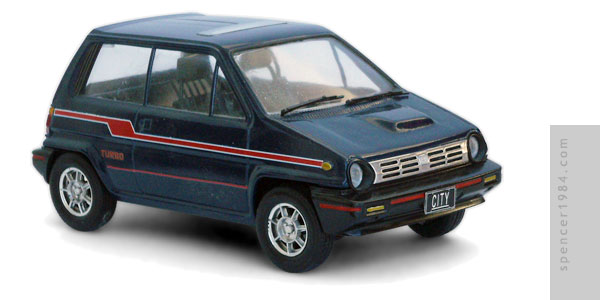
5. Honda City Turbo (Transformers G1: Autobot Skids)


If there is one type of car I hate, it is the slow, underpowered subcompact/city car. The turbo version of the Honda City has good acceleration for 1980s standards, but it still has a low top speed. Also, I also hate the styling of this car.


4. Volkswagen Bettle (Transformers G1: Autobot Bumblebee and Autobot Goldbug)


The Volkswagen Beetle had a list of problems. The electrical system had flawed wiring, front seat belts were poorly anchored, suspension had to be fixed, some Beetles had the front bumper omitted, the master cylinder was poorly installed. The Beetle was also underpowered and slow. The Beetle had better styling than the number 2 entry, landing the Beetle at the number 3 slot.


3. Nissan Vanette (Transformers G1: Autobot Ironhide and Autobot Ratchet)


The Nissan Vanette is a slow, underpower van. I am not a big fan of vans. The Vanette was just ugly. Those reasons make the Vanette the thrid worst car used by the Transformers franchise.


2. Pontiac Fiero (Transformers G1: Punch/Counterpunch)


The Pontiac Fiero is the only car from GM to have the engine located in the rear-middle of the car. During its lifetime, it had a few problems. The engine was known to catch fire and the cooling system had its own issues. The Fiero was also slow and underpowered, but it was a quick car. The engine and cooling system issues put the Fiero at number 2 on this list.


1. Chevrolet Beat and Trax (Transformers Live Film: Autobot Skids and Mudflap)

Skids on the left and Mudflap on the right
I was going to use the Chevrolet Volt here, but it did not get the screen time that the Beat and Trax got. Both Mudflap and Skids were just plain annoying. I could not stand those two and just made the second Transformers even worse. The Beat and Trax were not sold in the American market, but these two Chevrolets remind me of a horrendous car, the Chevrolet Aveo. The Aveo is one of the worst cars on the American roads. Chevrolet did a poll with the Beat, Trax, and Grooves, and the Beat won. Chevrolet put the Beat into production. The Beat is slow, sluggish, and underpowered. Chevrolet has never had a decent subcompact car. Besides, the Trax is not being made and the Beat will be sold in America as the Spark starting in 2012. Why Michael Bay had to feature these two cars, I have no idea.

CarJunkie

MINI John Cooper Works Coupe

S4 / 1.598 cc / 211 PS / 207 lb/ft (280 Nm) @ 2.000 - 5.300 / turbo / 0 - 62 mph (100 km/h): 6,4 s / Vmax: 149 mph (240 km/h)

(click images for a larger view)


Related Posts Plugin for WordPress, Blogger...